




Native DSD through the “VIP entrance”
With native DSD, there is no detour: the DAC processes the signal directly. DSD1024? Of course.
Digital-to-analogue converter
Analogue soul. Digital precision.
Discrete DSD DAC · PCM and DSD
It accepts both DSD and PCM. Hardware converts PCM to DSD256, so every source follows the same carefully designed signal path to the analogue outputs.
With native DSD, there is no detour: the DAC processes the signal directly. DSD1024? Of course.
Digital-to-analogue conversion is handled by an analogue DSD converter developed in-house. The aim is to let the technology recede, rather than add another digital sound character.
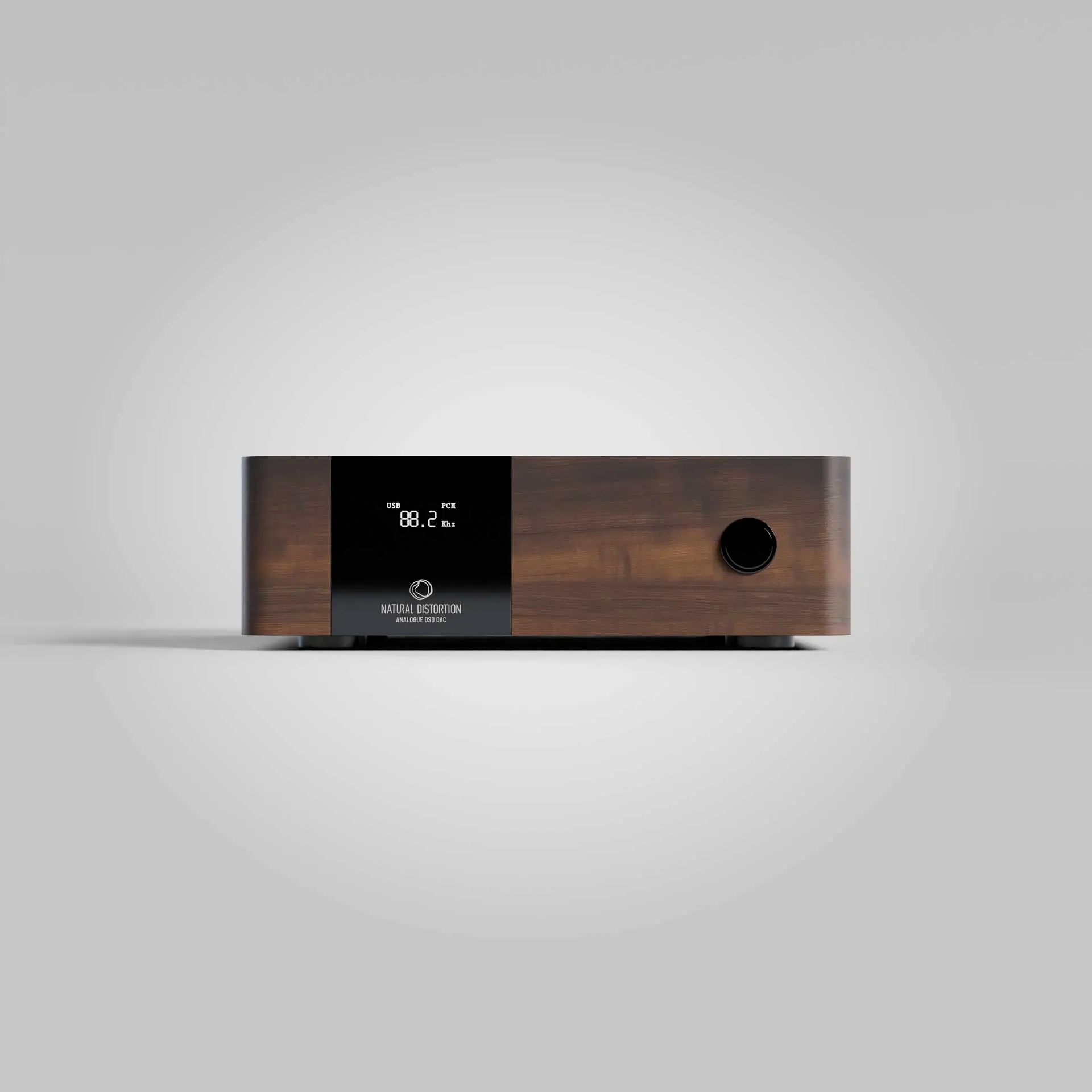
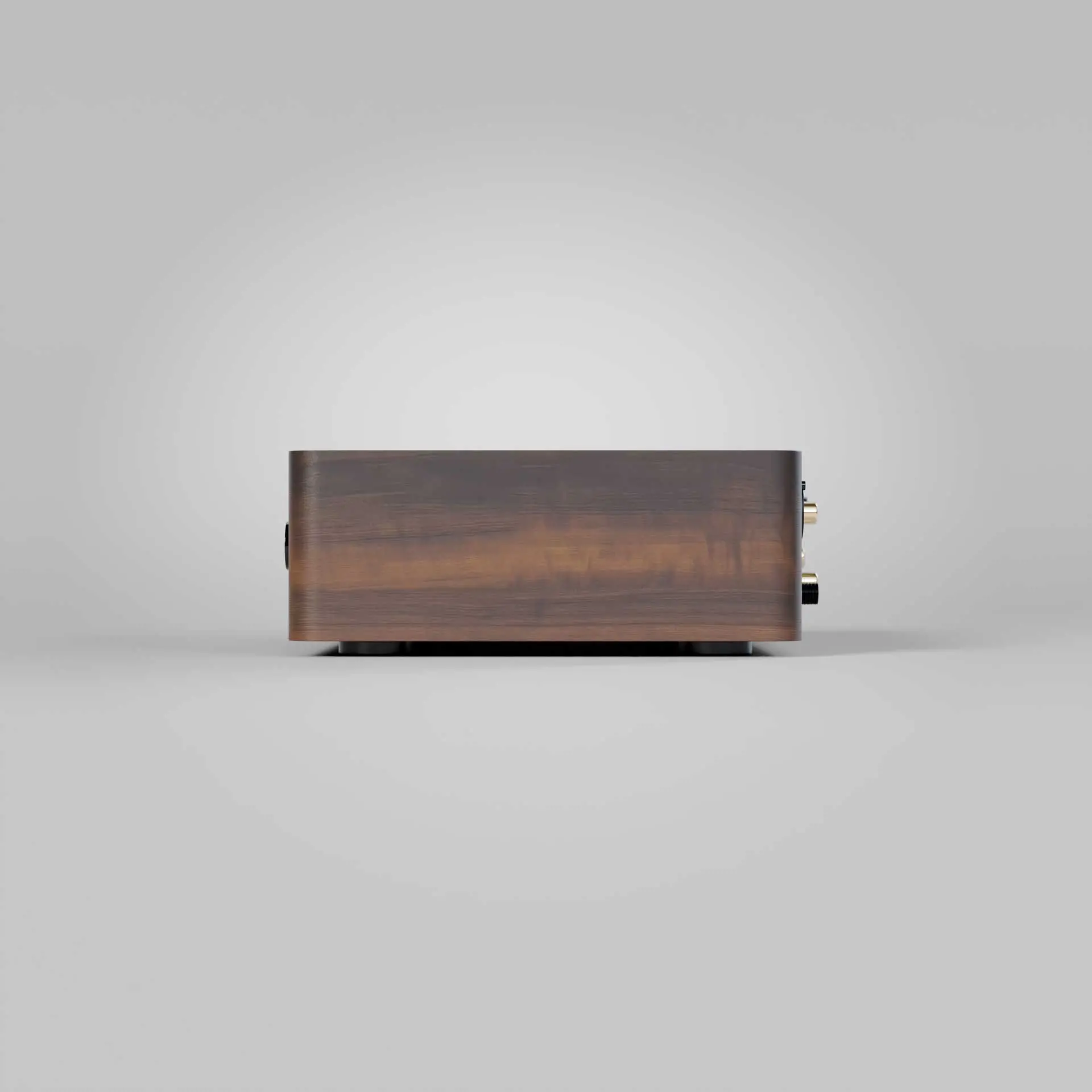
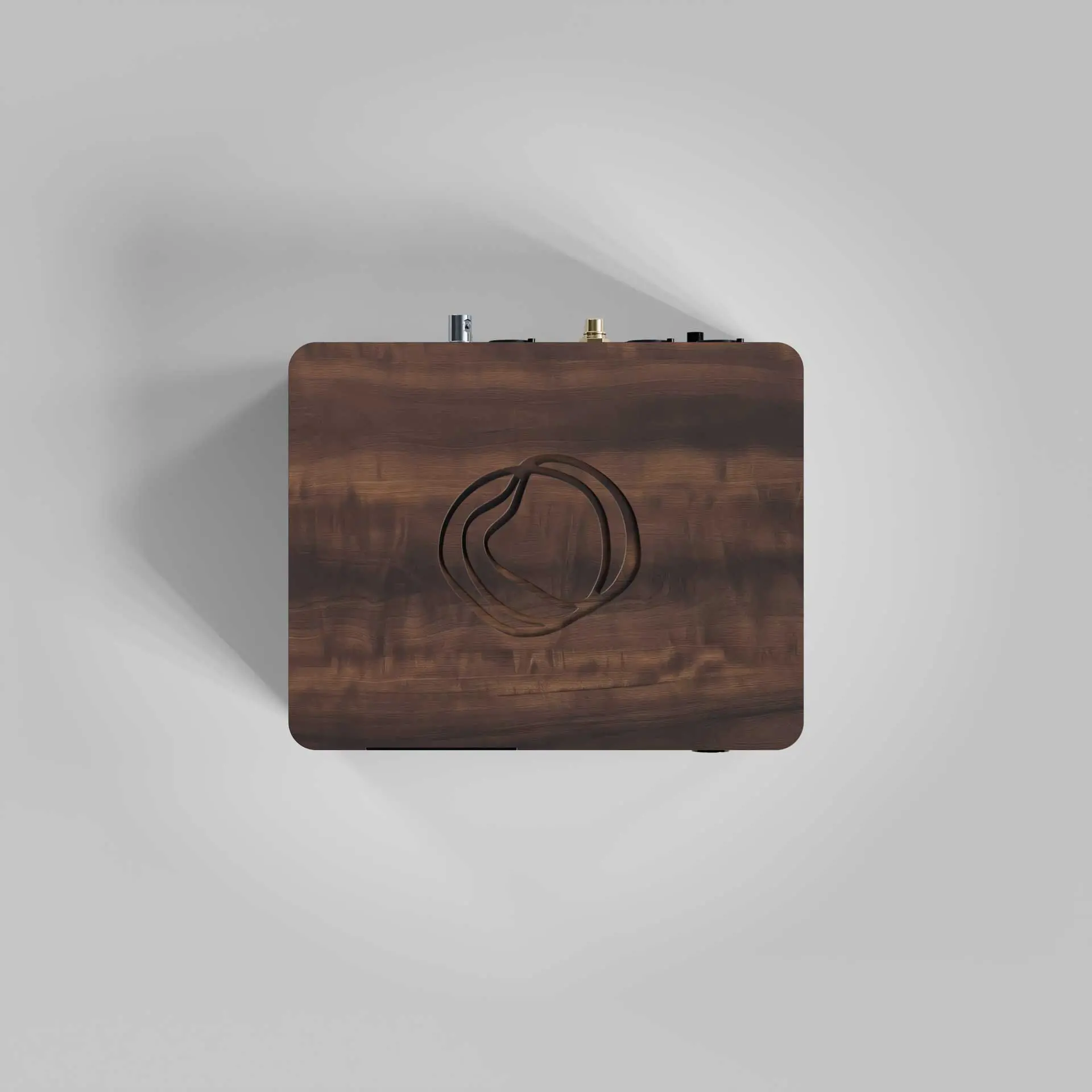
Solid black walnut, restrained controls and a form that does not need to explain itself.

Connectivity
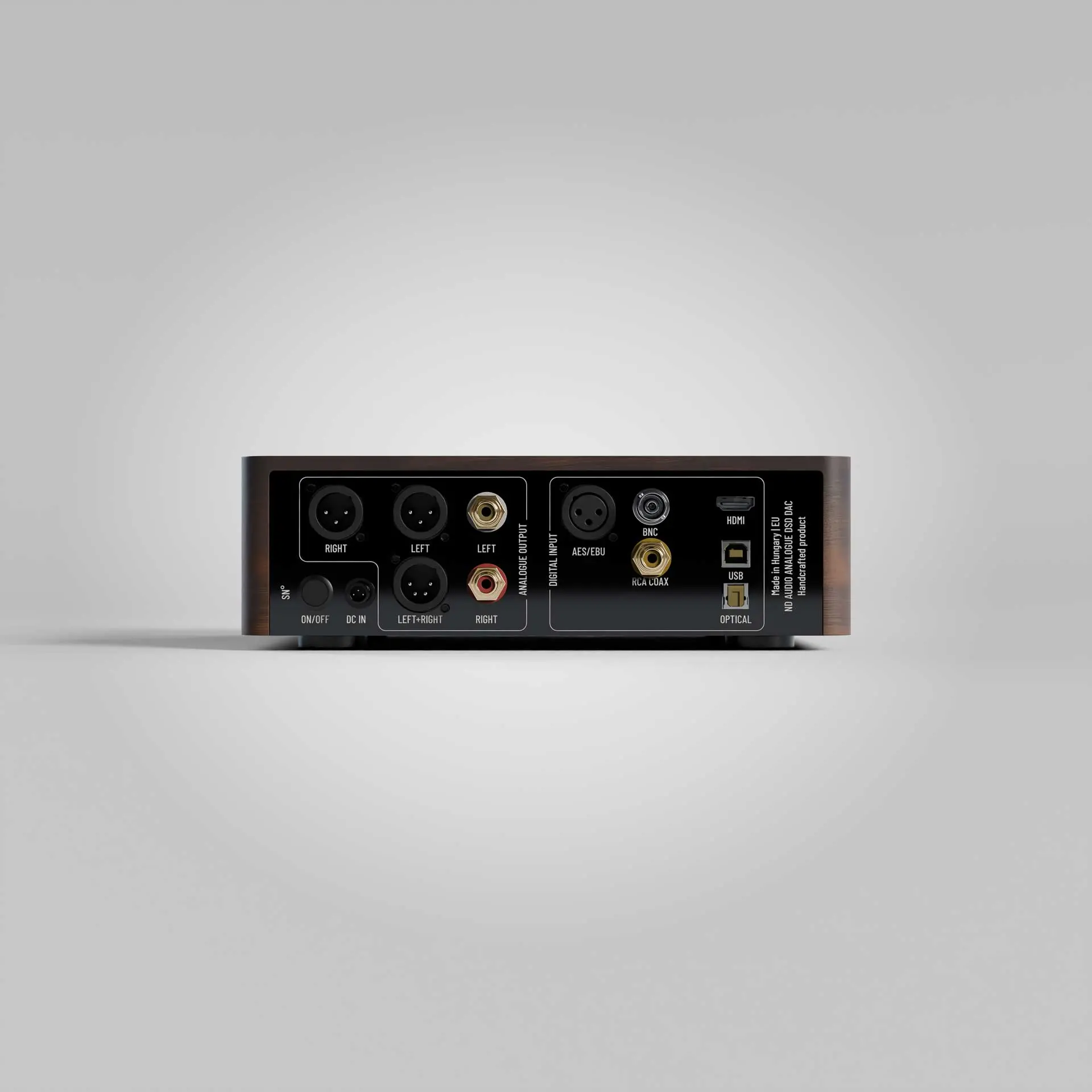
Alongside USB, the familiar connections are here too: AES/EBU, RCA coaxial, BNC and optical inputs.
The name can mislead: this is not a standard HDMI connection. It is an I²S input for compatible CD and SACD players. PCM from a CD passes through the hardware DSD conversion stage, while a native SACD signal reaches the DSD DAC processing stage directly.
What you need
One button to control the device. It is made for people who listen to music rather than study feature lists. There are no complicated menus: the display shows the selected input and resolution.
It accepts USB, coaxial, optical, S/PDIF, AES/EBU and HDMI (I²S) digital inputs. Native DSD files up to DSD1024 are handled without conversion.
Two batteries alternate: while one powers the device, the other charges. This allows the signal path to operate apart from mains noise, giving the music a quieter, clearer background.
Technical data
The figures shown are valid but not yet complete. Final technical specifications will be published after independent measurements.
final details pendingAnalogue outputs
2× STEREO RCA / 2× STEREO XLR
(2× 3-pin stereo, 1× 4-pin stereo)
XLR output level
2.5 V RMS at 0 dBFS (7.07 Vpp)
RCA output level
1.25 V RMS at 0 dBFS (3.54 Vpp)
Digital inputs
USB · AES/EBU · RCA · BNC · optical · I²S
Power supply
Alternating battery operation
Dimensions
240 × 78 × 190 mm
Weight
2.2 kg
Signal path and conversion
Every DAC has the same task: to turn a digital signal into an analogue one. What differs is the format it starts with and the path it takes.
| What happens? | ANALOGUE DSD DAC | Chip based DAC | R-2R DAC |
|---|---|---|---|
| What performs the conversion? | Our own analogue DSD converter | A dedicated DAC chip | A network of precision resistors |
| What happens to PCM? | We convert PCM to DSD256 in hardware. Our own analogue DSD converter then turns it into an analogue signal. | The DAC chip processes PCM through its own architecture. | The resistor network converts it directly into an analogue signal. |
| What happens to native DSD? | It reaches the analogue DSD converter without conversion. | The chosen DAC chip determines how it is processed. | Many R-2R devices first convert DSD to PCM. Other designs use a separate conversion path built for DSD. |
| What determines the signal path? | PCM and native DSD ultimately reach the same analogue DSD converter. | The chosen chip’s architecture largely determines how the signal is processed. | The design is primarily built around direct conversion of PCM to an analogue signal. |
The difference is not which files can be played. It is what happens to them on their way to the analogue outputs.
ANALOGUE DSD DAC
Yes. PCM is converted to DSD256 in hardware, while native DSD is handled without conversion, up to DSD1024. Both signal paths reach the same in-house analogue DSD converter. Read more on our Technology page.
D/A conversion is carried out by our in-house analogue DSD converter. We use neither a DAC chip nor an FPGA for this conversion.
USB, AES/EBU, RCA coaxial, BNC and optical inputs are available. The I²S input is intended for compatible CD and SACD players.
No. The DAC receives I²S over an HDMI connector; this is not a standard HDMI connection. PCM from a CD passes through hardware DSD conversion, while the native SACD signal goes directly to the DSD converter. To check compatibility with your player, get in touch.
The published specification lists stereo RCA and XLR outputs, including a 4-pin stereo XLR connection. The XLR output level is 2.5 V RMS (7.07 Vpp), and the RCA output level is 1.25 V RMS (3.54 Vpp), both at 0 dBFS. The full technical specification is still being finalised.
Two batteries alternate: one powers the DAC while the other charges. This allows the signal path to operate separately from noise in the mains power supply.
A single control handles operation, without a complicated menu system. The display shows the selected input source and resolution.