




One approach, two units
Between the digital source and the music you hear, the DAC and amplifier form a single system. A dedicated four-pin XLR connection links the two units.
Digital Integrated AMP
One control. Four inputs. Battery power. A shared system with the Analogue DSD DAC.
Digital Integrated AMP
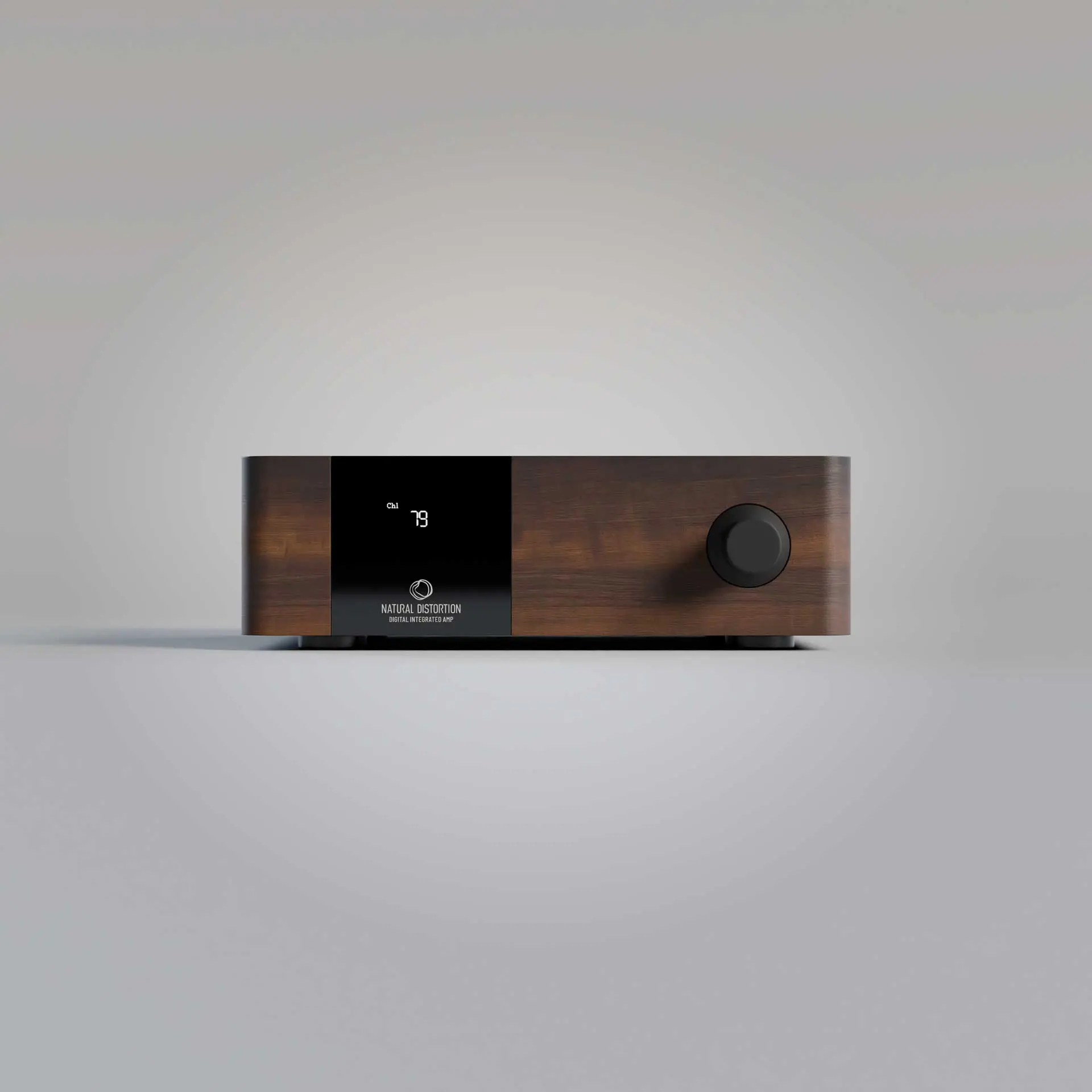
Natural Distortion Audio’s Digital Integrated AMP is being developed to complement the Analogue DSD DAC. A short four-pin XLR cable connects the two units. We will present the system with Ottó Popori’s electrostatic loudspeakers at Budapest Audio Expo 2026 and the 28th Audio Video Show in Warsaw.
Between the digital source and the music you hear, the DAC and amplifier form a single system. A dedicated four-pin XLR connection links the two units.
The unit shown is currently a prototype. Expected power output is 2 × 100 watts into 4 ohms; we will publish the exact specification when development is complete.
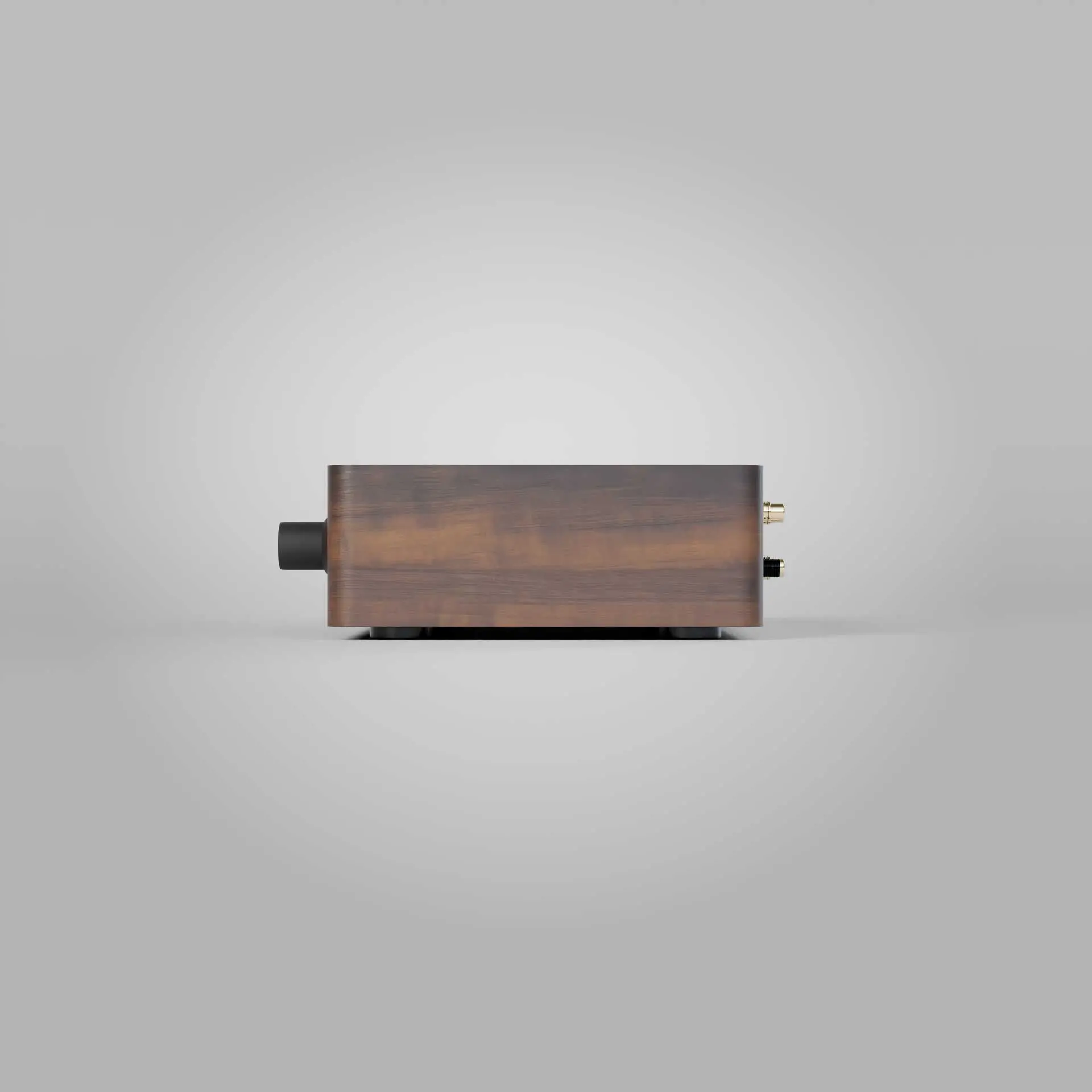
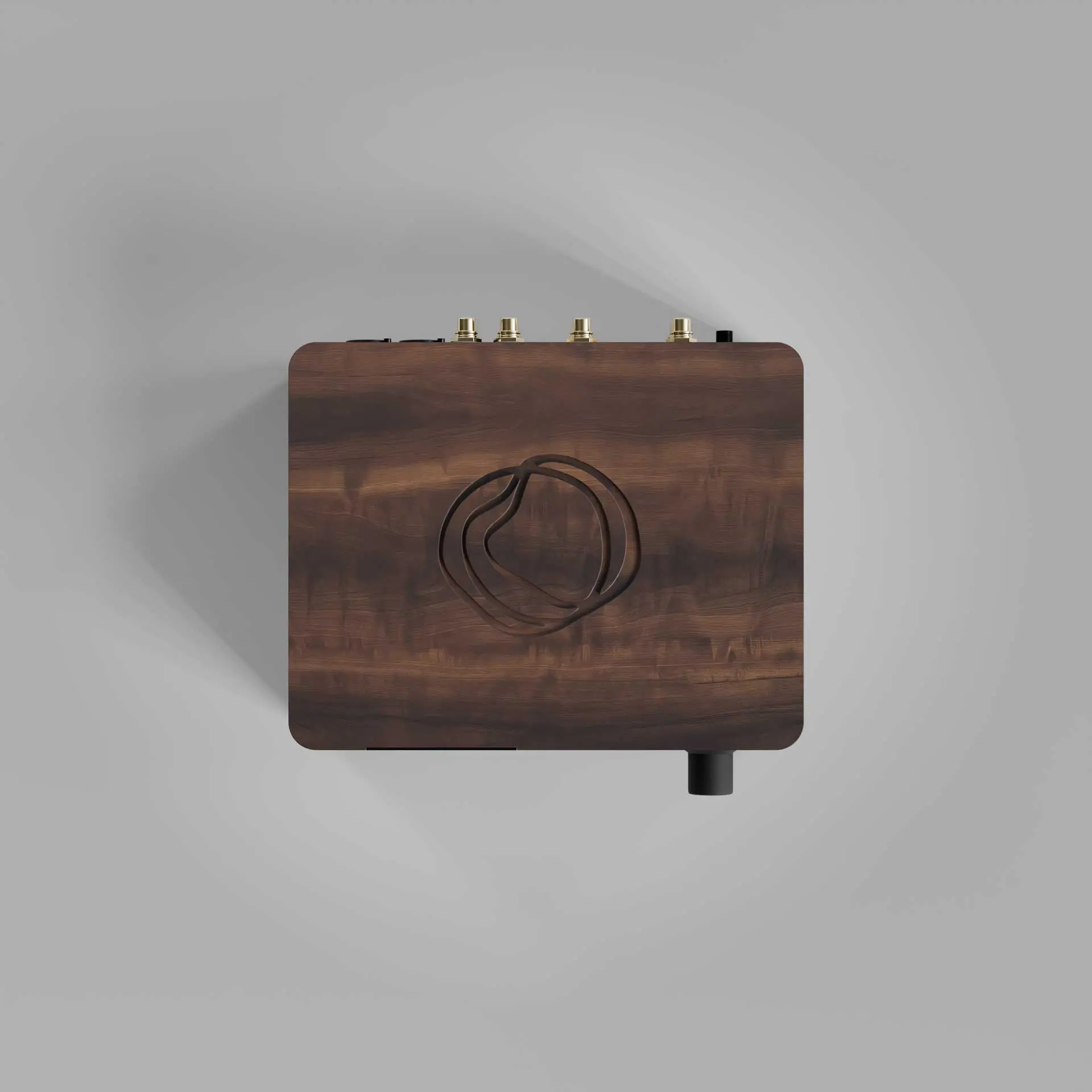
The amplifier and the Analogue DSD DAC share a visual language: the same materials, proportions and details connect the two units. The aim is for them to sit side by side as parts of one coherent music system.
Thinking in systems
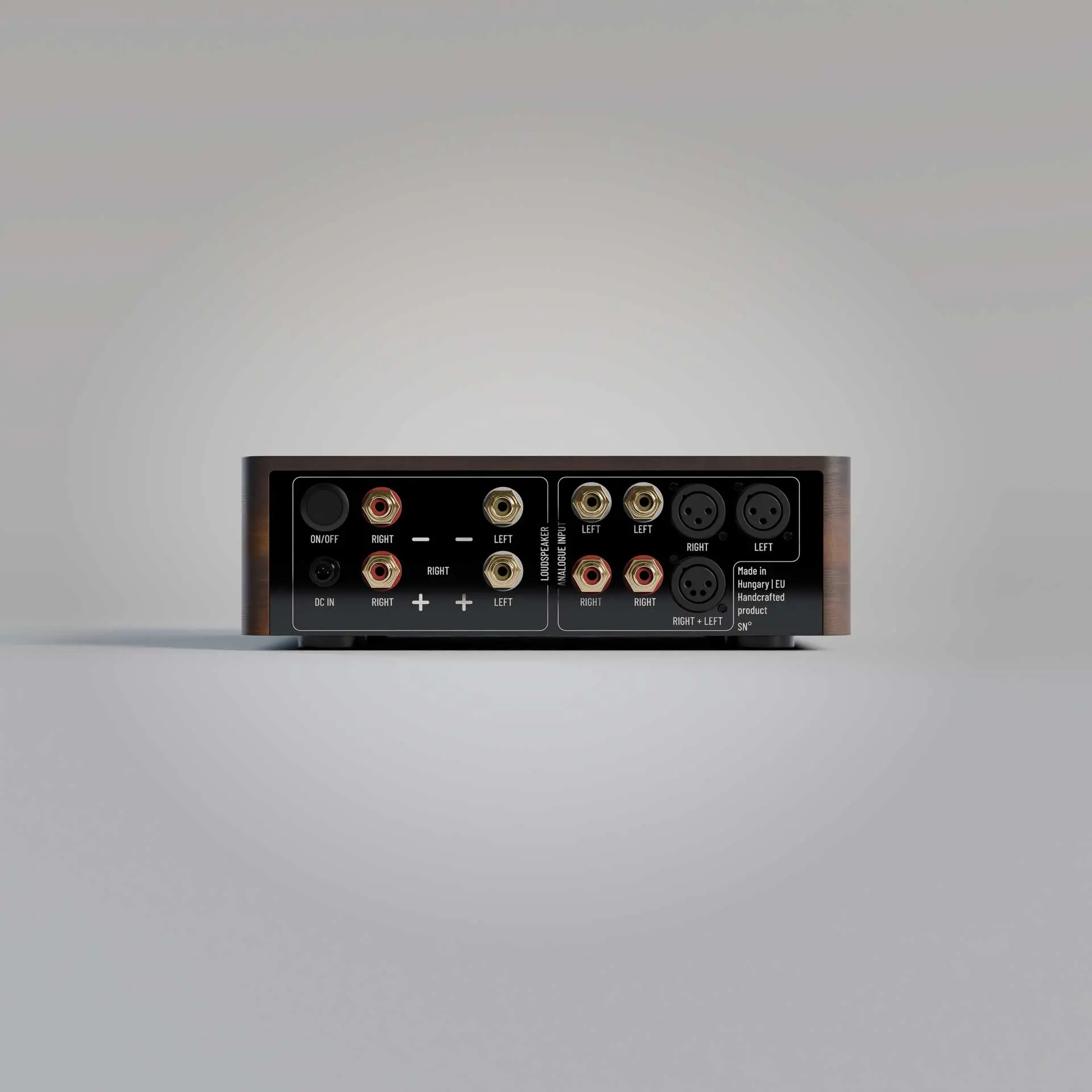
The Analogue DSD DAC and the amplifier share the same approach. The amplifier’s four-pin XLR input connects to the DAC’s four-pin XLR connector, so a single short cable is all that is needed to link the two units. Relay volume control and battery power follow the same unified system concept.
The planned connections include two stereo RCA inputs, one stereo input using three-pin XLR connectors, and a four-pin stereo XLR input designed for the DAC. Details of the external clock and exact compatibility still depend on the results of development.
The focus of the demonstration
You can hear the amplifier at two autumn exhibitions: Budapest Audio Expo 2026 and the 28th Audio Video Show in Warsaw. In Budapest, it will be demonstrated with Ottó Popori’s electrostatic loudspeakers. Further information is available on the official Budapest Audio Expo and Audio Video Show websites.
The exterior design, user interface and internal solutions may still change. We will share updates on the final release in our newsletter and on our social media channels.
A single control operates the unit: a long press switches it to standby, a short press selects one of the four input channels, and turning it operates the relay volume control. We will announce the final power output and availability in our newsletter.
Development status
The exhibitions offer a chance to hear the current stage of development. The final technical data sheet and price are not yet available; the planned power output is 2 × 100 watts into 4 ohms.
In developmentDevelopment stage
Development unit
Demonstration
Budapest Audio Expo · 17–18 October 2026
28th Audio Video Show, Warsaw · 23–25 October 2026
Control
Relay volume control · single-control operation
Planned power supply
Alternating battery operation
Planned connections
2 stereo RCA and 2 stereo XLR inputs (four-pin system connection)
Planned power output
2 × 100 W into 4 ohms
About the development
In Budapest and Warsaw, you can explore and listen to the current stage of development. Alongside the details of the Budapest and Warsaw demonstrations, you can read about the background to the development in our story.
| Question | At the exhibitions | Current status | The future product |
|---|---|---|---|
| Which unit will be on show? | A development unit of the Digital Integrated Amplifier | Development unit | The final design is not yet known |
| Can I listen to it? | Yes, as part of the exhibition demonstration | In a shared system with the Analogue DSD DAC | We will announce future demonstrations in our newsletter |
| Are the technical specifications available? | The technical specifications are not yet final | Connections and power output are being verified | We will publish the data sheet after measurements |
| Can I order it yet? | The unit shown is not a commercial product | Price and delivery time have not yet been announced | We will share news of availability in our newsletter |
We will announce the final release and technical specifications in our newsletter.